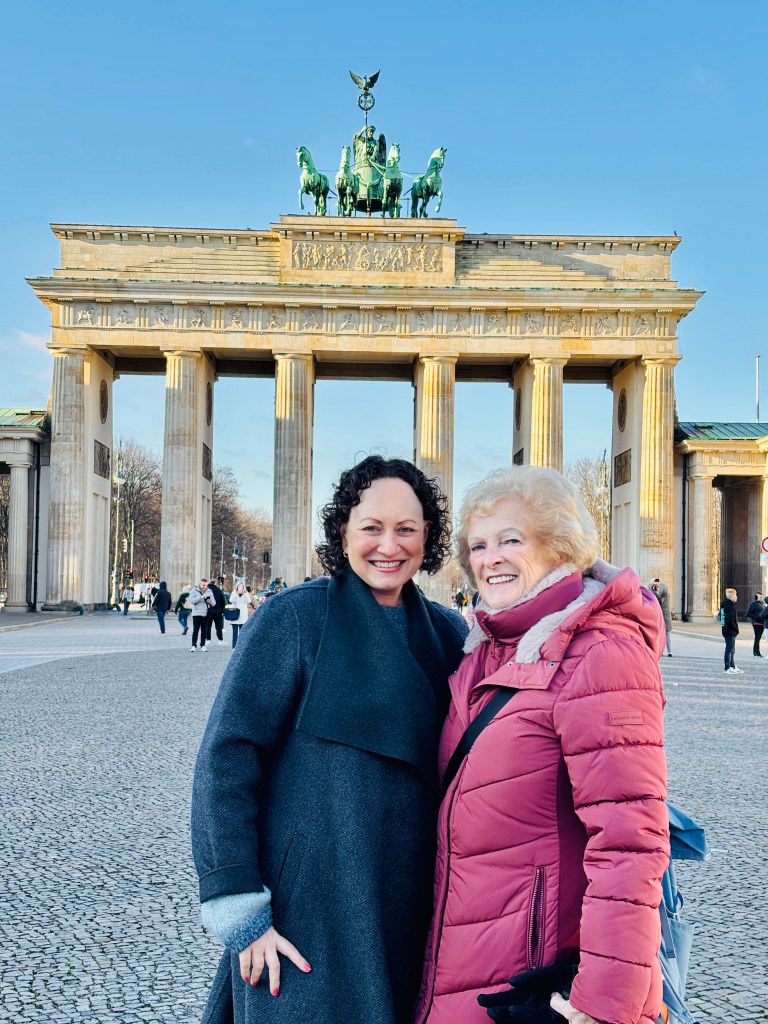
In this new year, we savored every last moment of being in CA with our family and friends before hopping back on the long journey back here to Berlin. Lucky for us, we brought back a visitor! My sweet mother-in-law flew back to Berlin with us for a jam-packed 10-day visit in which we explored the city by bus and rail, and took Julian with us for a fun jaunt to Munich for the weekend. We had great bus karma and caught all of our connections for a smooth public transit experience, which was a rare win for Deutschbahn! In addition to several must-see spots in Berlin (Brandenburg Gate, Berlin Wall Memorial, Holocaust Memorial, Kaiser Wilhelm Memorial Church & KaDaWe), we took a wonderful tour through the old Jewish quarter near Oranienburger Straße, had a somber day at the incredible Jewish Museum, and spent some time in Potsdam both at the Sansoucci Palace and shopping our way through the downtown. Our days were a mix of fun urban exploring and acknowledging unnerving history, trying to look into the nearby forests without picturing WWII horror scenes, and appreciating the ways in which modern Germany has made it abundantly clear that they will not forget the inhumanity of the Nazi regime. In between sightseeing and transit bingo courtesy of Apple Maps, we also had some particularly delicious meals including a random Russian lunch in Potsdam where we feasted on delicious mystery dumplings, dining at the seafood counter & decadent bakery section at KaDaWe’s food court, and fancy salads at the über-retro cool Italian spot Cocodrillo in Mitte, recommended by my former student Kirk who spent a semester abroad here. All of the walking through the city and running to catch the bus on top of jet-lag made for a whirlwind week, but we laughed on our way through it all, and had a blast.

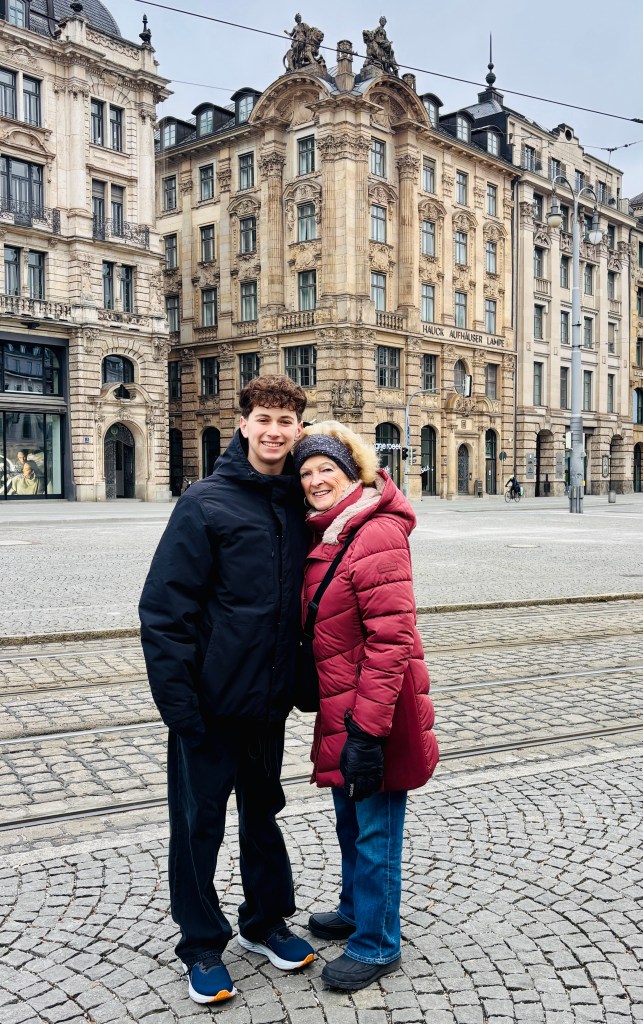
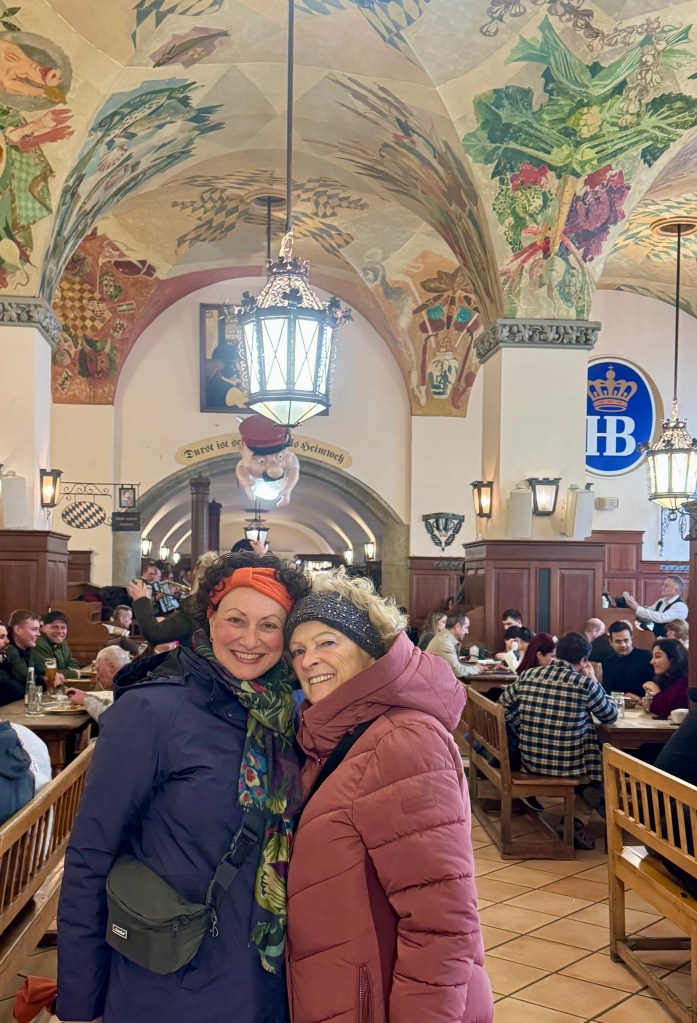
We also had a chilly but incredible weekend in Munich with Julian, where we took a chilling Third Reich Walking Tour followed by a visit to the iconic Hofbräuhaus (although we chose to eat at the Hard Rock Cafe instead), and enjoyed strolling around the 1972 Olympic Park when the sun poked its way out from behind the overcast skies.
After her visit came to its natural conclusion, we had a few mellow days at home that included a fabulous birthday party for a lovely new German friend here who we were introduced to by a parent of my former student. The party was a raucous celebration packed with guests that included singing Billy Joel’s Piano Man at midnight (the German crowd was impressed that Jonathan actually knew all the words), and we met delightful people, including a wonderful couple who we met the next day for a fun dinner out. We did ride our bikes through dense fog to the bus and a train to get to the party, but fortunately met a couple there who lives near us & offered to drive us back to the bikes (post-Billy Joel) so we wouldn’t have to wait for the S-Bahn and bus to get back home. Julian was a great sport about hanging with the smallish teenage crowd who primarily spoke in German, while we could be more choosy in finding English speakers amongst the larger mass of adults.
More delight ensued this past week, as I had my first friend come to visit us here! My dear childhood friend Joanna was in Oslo to visit her husband who was teaching a class there for several weeks, and took an easy hopper flight down to Berlin as a part of her 50th birthday celebration. It was so much fun to show her our new stomping grounds!
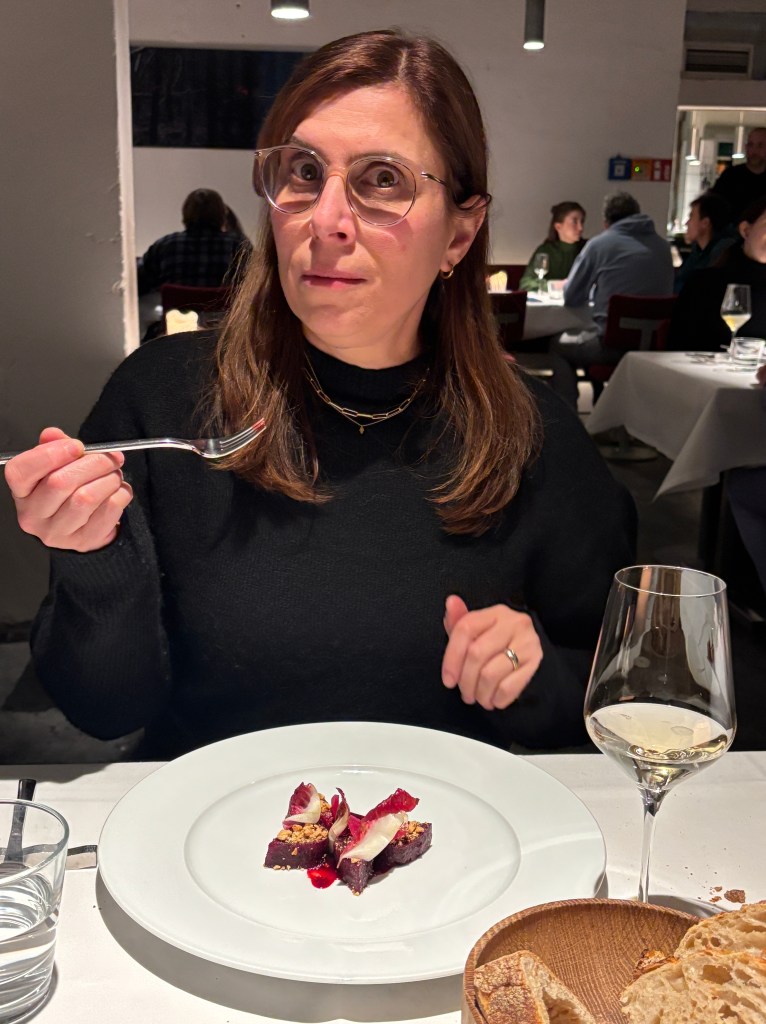
On her first day here, we saw the sights, perused the shops in the Brooklyn-like Prenzlauer Berg, and ate spectacular food at a Michelin-starred vegetarian restaurant called Cookies & Creme that was literally situated down an unmarked dark alley behind a hotel parking lot. We saw a rather enormous chandelier and an unmarked concrete staircase at the end of the alley, which we ascended before ringing the doorbell to enter. After we were buzzed inside, we peeked behind lush velvet curtains that yielded an eclectic bar where we left our coats and were ushered upstairs to an industrial chic dining room with starched white tablecloths, where the only piece of art on the walls was a framed checkerboard poster that read, “fricken” (the f-bomb) with a small American Express logo in the bottom right corner. The little pink paper menu was deliberately ambiguous with dishes ever so briefly listed by a few of the raw ingredients, leaving us little idea what each dish might entail. But we were smacked over the head with awe by each creative, artful and decadent presentation of absolutely divine little plates of food. It was one of the most memorable meals either of us has ever had. The dishes pictured below, in order of appearance, are as follows: pickles, bell pepper, and beetroot. You can see why our eyes popped out of our heads with each dish, as we savored each bite.
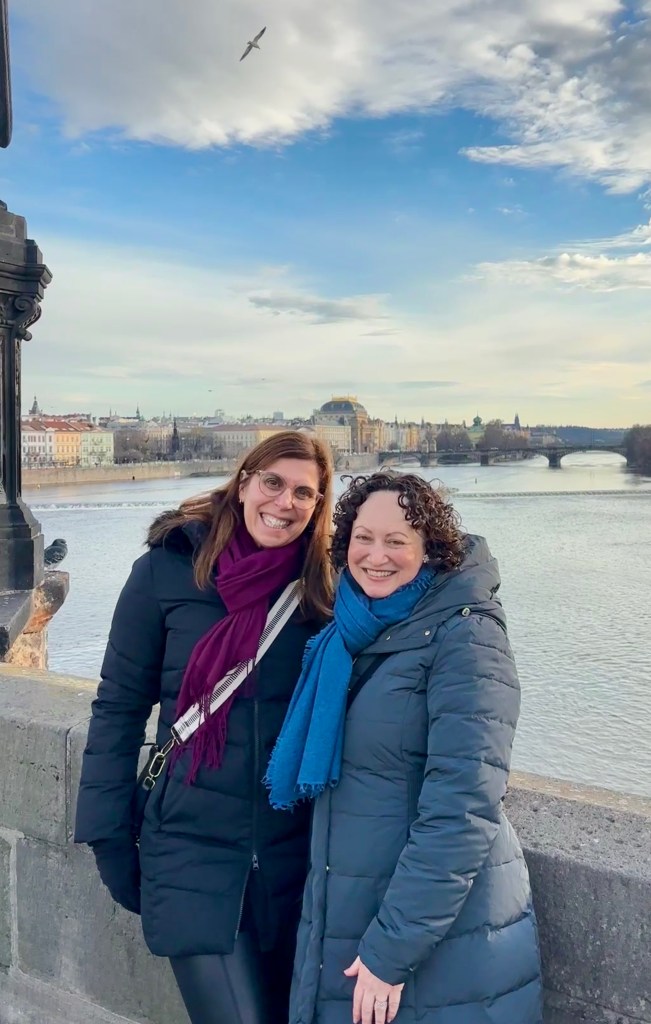
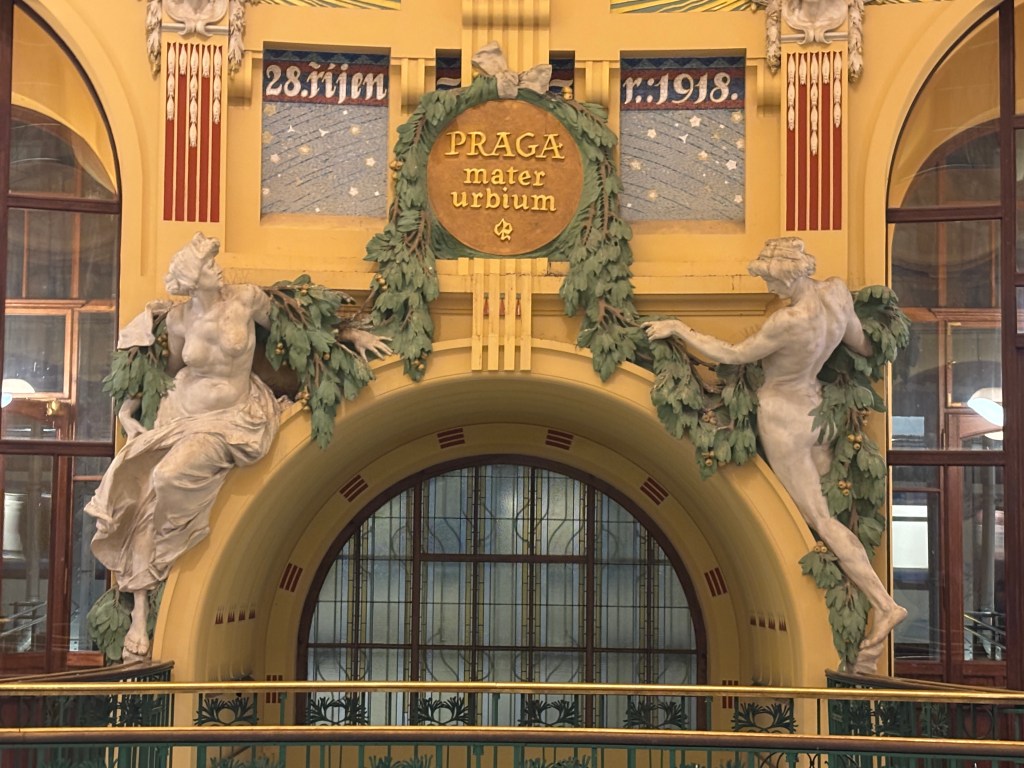
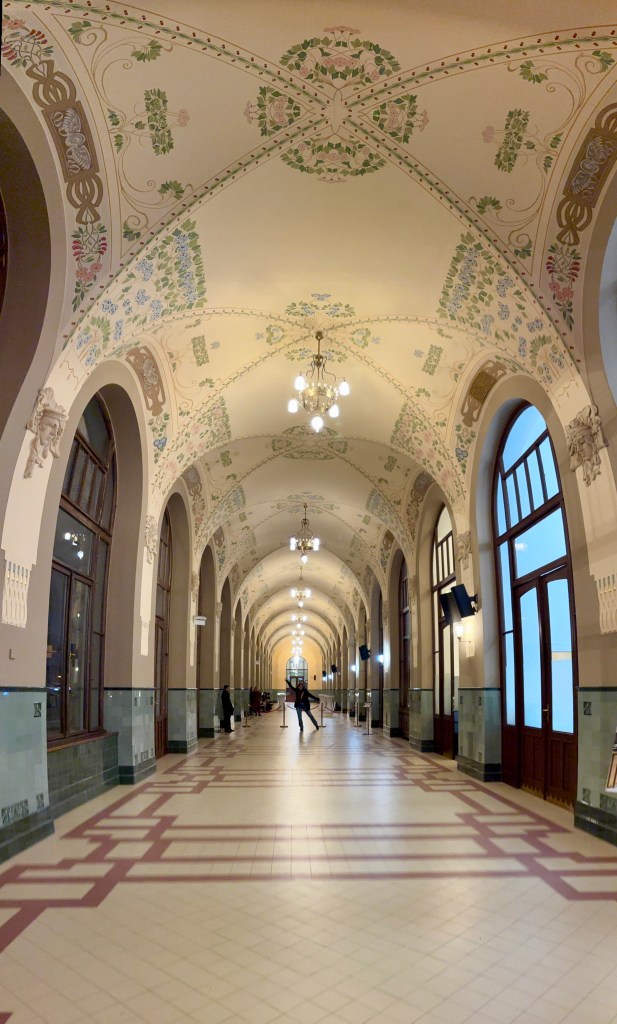
In addition to our days exploring Berlin, we took a train down to the spectacular city of Prague, where we spent four glorious days and nights laughing, walking down endless cobblestone streets, and learning all about the city’s Jewish history, architectural wonders, music scene and its unusual position in WWII that prevented any substantive wartime destruction. Even the train station’s interior beamed with splendor before we set foot on the Czech capital’s streets.
On our first night, we found our way by tram and windy streets, clunky suitcase wheels dragged across ginormous cobblestones, to our very “charming” AirBnB that was quite spacious and well-located, but had a distinctively musty aroma and shelves filled to the brim with old books and antique tea sets. We originally thought that the toilet for the guest bathroom was MIA, but later discovered that it was simply detached from the sink and shower room, located around the side of the house, out the kitchen door, down the long dark hallway towards the patio.
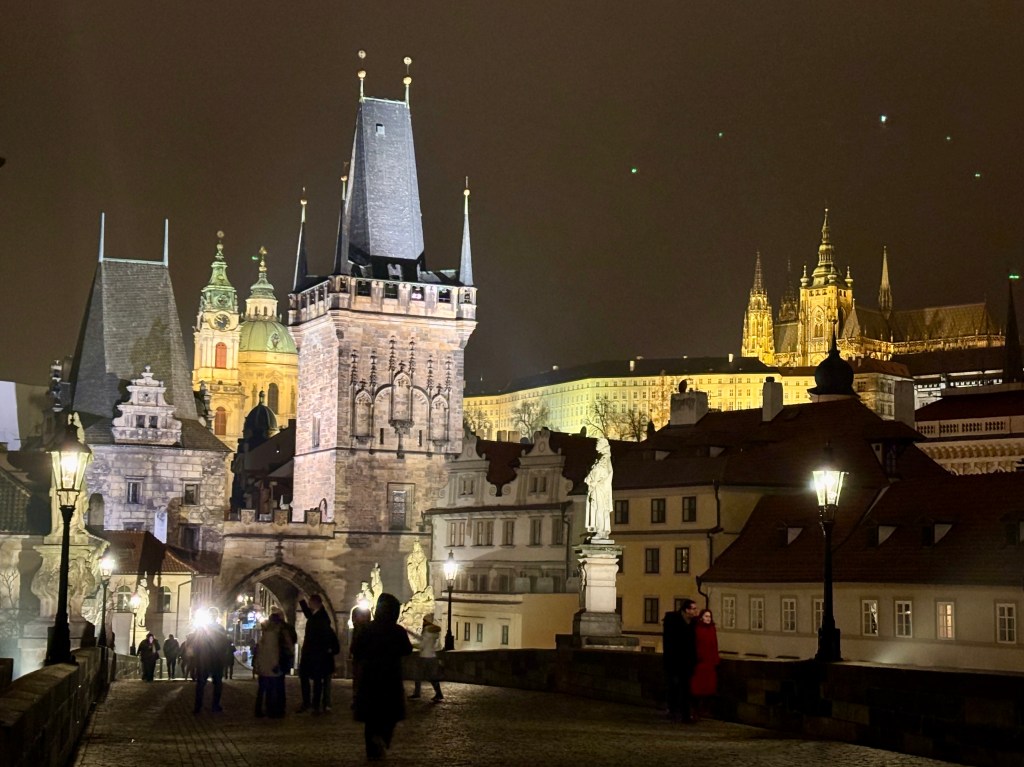
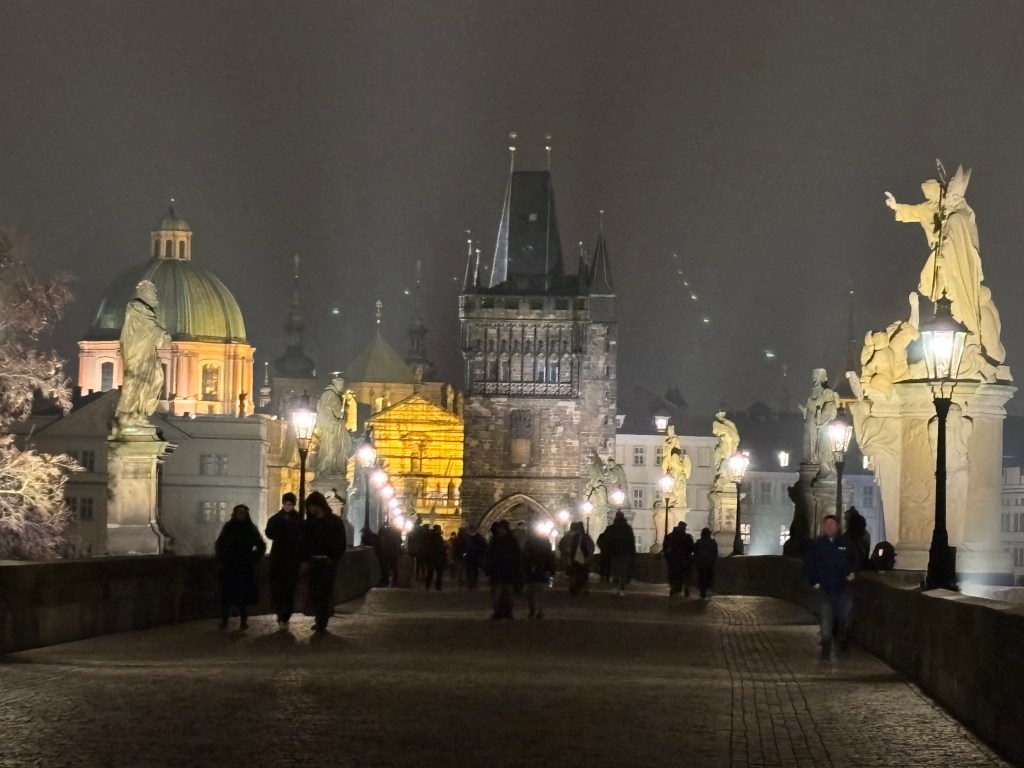
However, the fantastic location meant that we could walk down to the street and up another staircase, and find ourselves smack dab in prime viewing location of Prague’s most iconic sights from the Charles Bridge. Being a little dazed from our train journey, we didn’t initially realize how spot on our location really was, but were instantly dazzled by the fairy tale spires and picturesque lit-up towers. I now see why many say Prague is even more beautiful than Paris. The architecture is entirely unspoiled from WWII due to their staying out of the fray and accepting Nazi occupation without substantive resistance, but they were far enough from the central warfront to avoid Allied bombings as well. As such, their original architecture still in-tact is a stunning mix of Baroque, Art Nouveau, Neo-Classical and Neo-Gothic beauty. Everywhere we looked, something made us stop in awe.
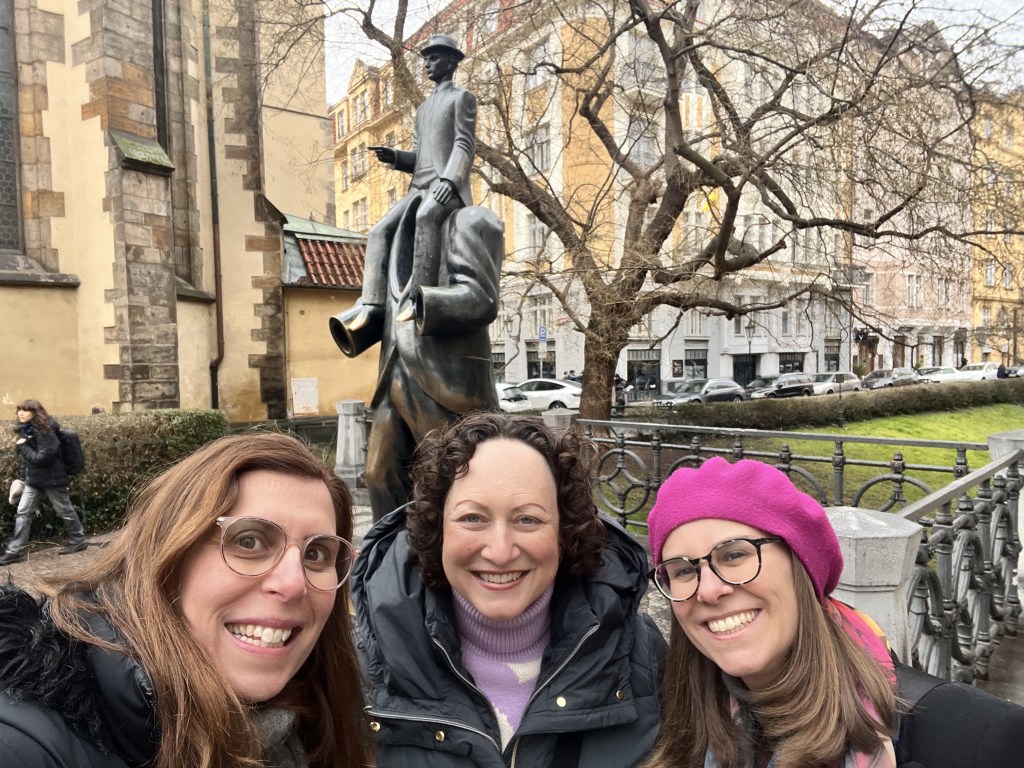
Our first full day started with a walking tour of the Jewish quarter led by Amalka, a wonderful local academic, active Jewish community member and mom with kids similar in ages to ours. Upon arrival in the Jewish Quarter, we were blown away by the scope and longevity of Jewish history in Prague. Rather than a single Jewish Museum, Prague’s Jewish community has chosen to set up historical exhibits in all five of their synagogues, only two of which are still used for religious services. One of them is used as a hall for small concerts clearly geared towards tourists (more on that shortly), while another is dedicated as a Holocaust Memorial to the community members who perished at the nearby concentration camp, Terezin. The walls are covered with alphabetically listed names of all community members who were killed. It was chilling.
Most of the activities for the Jewish community today are held in the Jewish community center, pictured here:
The building is adjacent to the 13th century “Old-New Synagogue” still used for Orthodox services. There is also a newer Jerusalem Synagogue outside of the old town (which was not on our tour route, but we saw a few days later). Prague’s Jerusalem Synagogue ended up essentially becoming Grand Central Station for torah scroll storage during WWII, with all of the Jewish communities of Europe sending their scrolls to Prague for safe keeping. This means that all of what we now call the “Holocaust scrolls” (around 1500 of them) came from Prague, where they were mended and restored before being distributed to Jewish communities around the world after the war.
Malka was a perfect tour guide for us, and we gabbed nonstop as we soaked up her knowledge and were starstruck by the incredible restoration of grand synagogue buildings, complete with stained glass windows, ornate wood carvings, and other features that we ordinarily associate with the grand Gothic churches of Europe rather than synagogues. It was awesome to see Prague’s bountiful ornately designed synagogues restored to their full glory, even if not actually in use due to the small size of the remaining communities there.
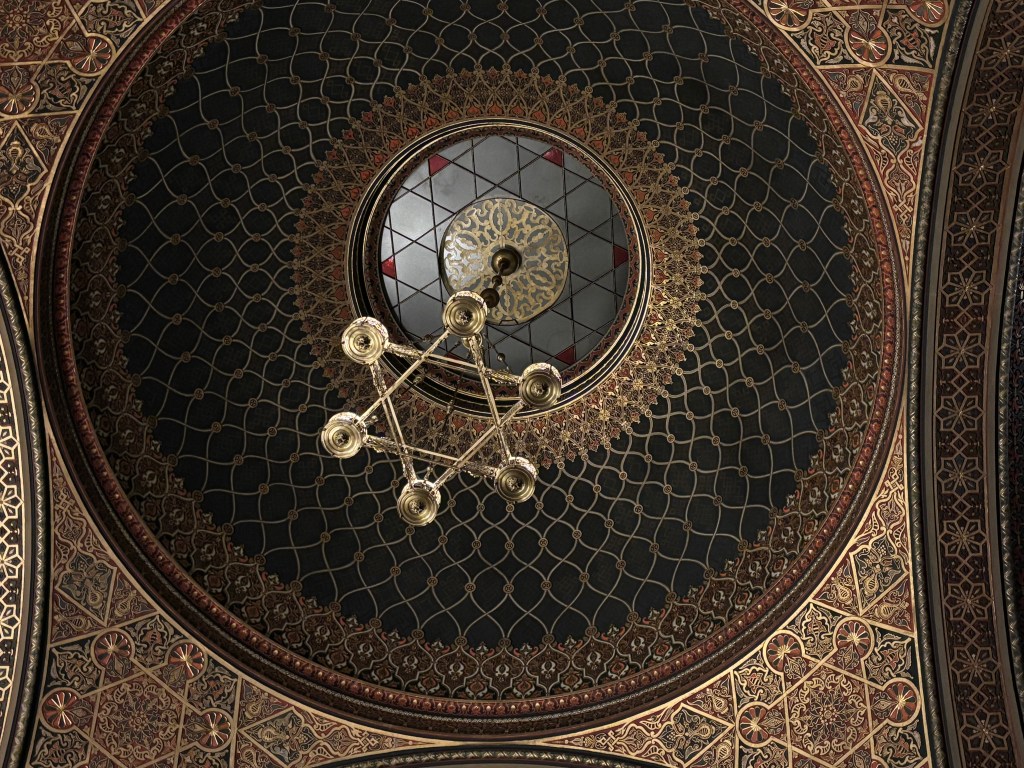
But back to the concerts for tourists… well, we were completely duped by the description of a “classical concert” held in the historic Spanish Synagogue of Prague. We should have known better, but the actual performance we attended was nothing short of comedy. The set-list was so clearly designed for Americans hopping off tour buses… imagine Fiddler’s “If I were a Rich Man” (with a very rudimentary trumpet in lieu of vocals) quickly followed by “Maria” from West Side Story, followed by the somber Yom Kippur melody of Avinu Malkeinu, and topped off with Queen’s Bohemian Rhapsody, and you’ll get the general gist. We had thought this would be the only way to see the Spanish Synagogue, but… that was not actually the case. Anyway, that comedic experience necessitated some good Czech beer, which we took care of right away. We popped into a nearby bar and ordered the local brew on tap, which was cheaper than water and absolutely delicious. That plus an order of fries took the edge off, and was our “appetizer” before taking a tram out to a local vegan pizza place, which sadly had no seating. As it turned out, it was also a cash only joint, and we had just enough of the local currency… until they charged us 30 cents for the pizza box. Fortunately, they waived the fee as I counted out the last of my change, and we hopped into an Uber back to our place. The Uber was only $2.50 for a 10-minute ride!
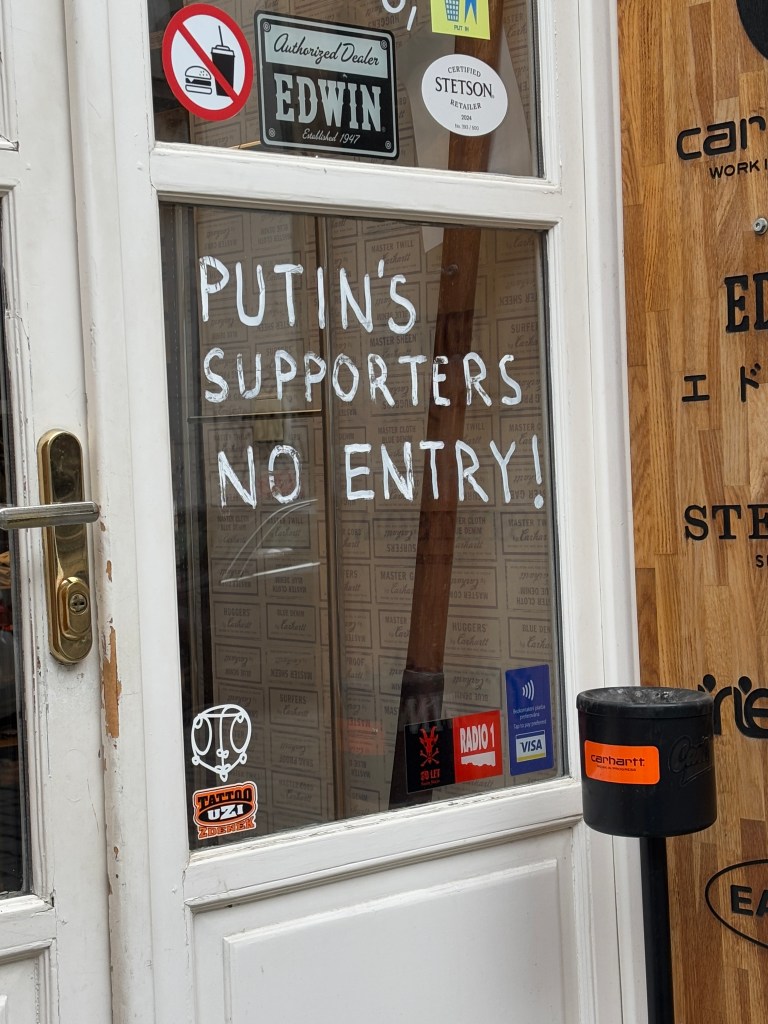
The next day, we had an awesome morning walking up to the castle grounds. We also spotted this fabulous sign on a storefront along the way:
Upon reaching the cathedral, we opted to hike up a spiral staircase consisting of 276 steps to the top for phenomenal views of the city.
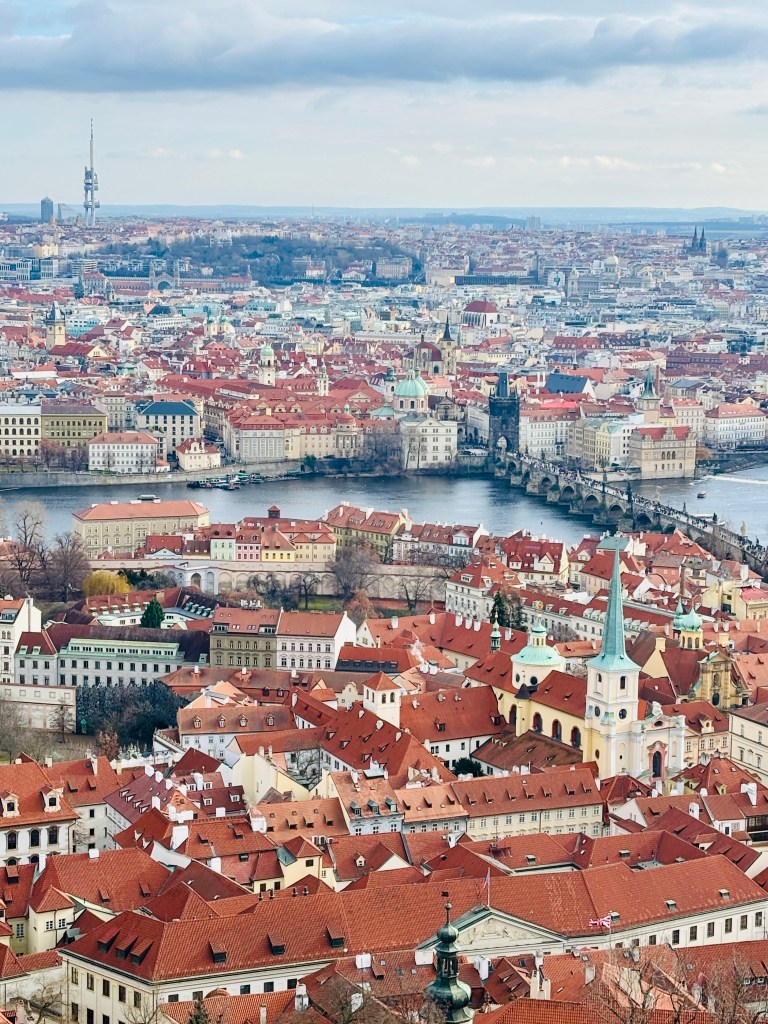
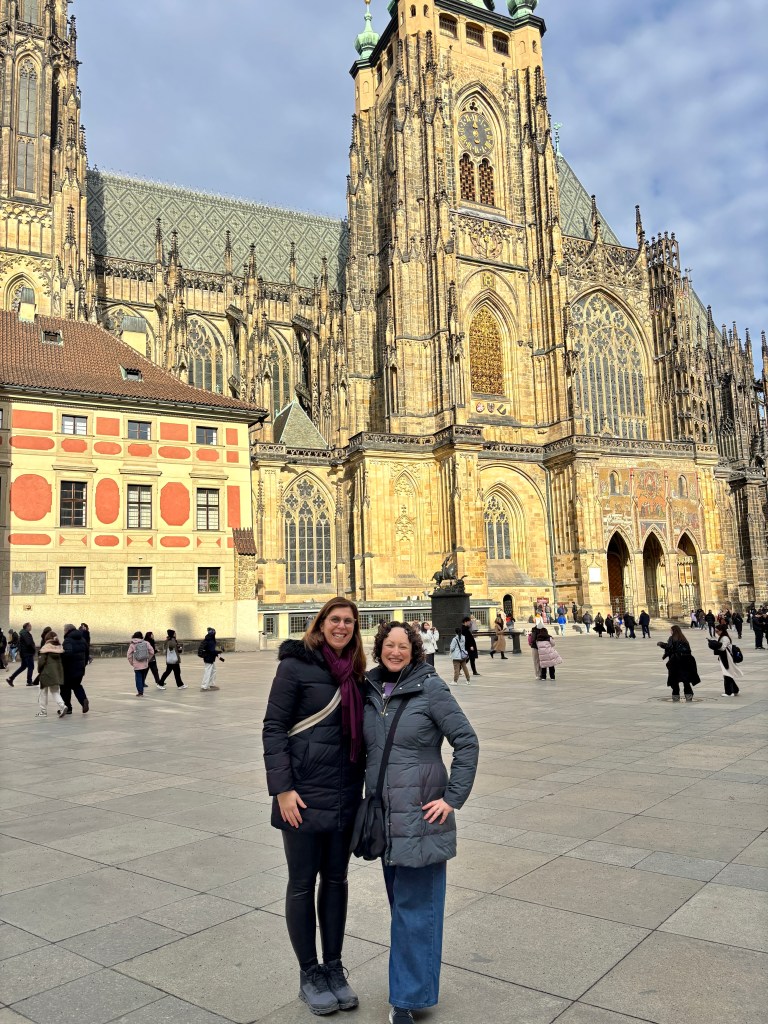
After that dizzying climb, we were thirsty, and the beer was the same price as the water, so…
But the next moment that stands out from our trip was our attempt to experience Shabbat services at the local JCC. Joanna had been corresponding with one of the local rabbis, and we had sent him copies of our passports in advance to meet the building’s security guidelines. As it happened, he completely forgot to put our names on “the list” for the security guard, who proceeded with a line of questioning for us that was totally hilarious… after he finally let us into the building. Joanna very graciously introduced herself and her cantorial credentials, which I think the security guard probably didn’t understand due to the language barrier. He then asked us what the last Jewish holiday was (Hanukkah), after which he literally asked us to tell him the story of Hanukkah. We tried not to laugh as we rattled off the basics– Festival of Lights, oil that lasts for 8 nights rather than one, Maccabees defeating the Persian army, etc. He then asked us to tell him the name of the helper candle used to light the other candles on the menorah. After we both called out “Shamash” in unison, he finally buckled and opened the front door for us. Sheesh! The actual services were pretty old school and largely geared towards the group of college students there for study abroad. But Joanna made contact with her local colleagues (check/Czech!), and we walked from there to a fabulous craft beer hall across the river that was filled with boisterous locals for a delicious hazy IPA that hit the spot.
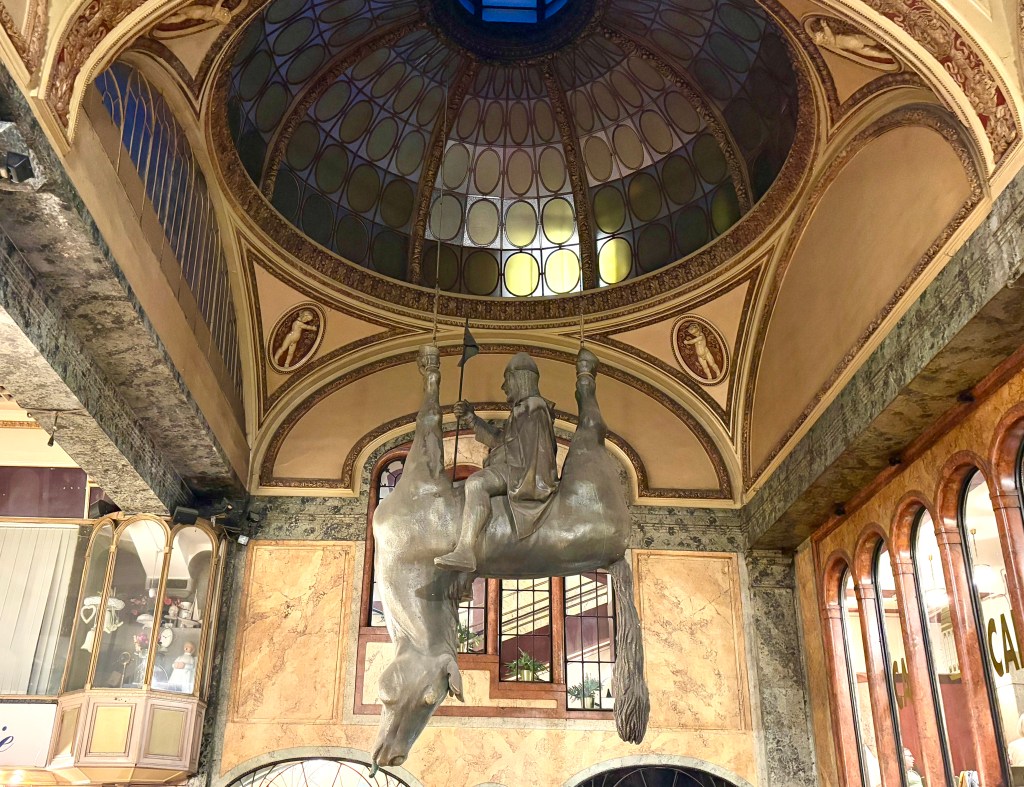
Saturday in Prague was all about exploring the new town, and we had another phenomenal guide booked to show us the Art Nouveau architecture of the city. Vlad was truly exceptional, and led us in & out of countless buildings to show us the architectural features of places as varied as the local YMCA, paintings covering the walls of the ornate central post office, the interiors of several restaurants and hotels, and an arcade of old shops owned by former President Vaclav Havel’s family (pictured here with a soldier riding a dead upside down horse hanging from the ceiling). It was awesome, and ushered us to corners of the city we never would have discovered otherwise.
Our last stop on the tour was the newest synagogue in Prague, the Jerusalem synagogue, which was built in between homes on a residential street in the new town once Jews were permitted to live outside of the old town in 1906. I was awe-struck when it first popped into our per view. It is bold– boisterous even, with its bright blue and reddish exterior, and a big golden Star of David standing tall above the highest tower of the building. The architecture mimics the iconic terracotta striped arch design of the Grand Mosque of Cordoba, an Andalusian marvel that I have taken students to as a part of our Jewish-Muslim Co-Existence Tour en route to Morocco.
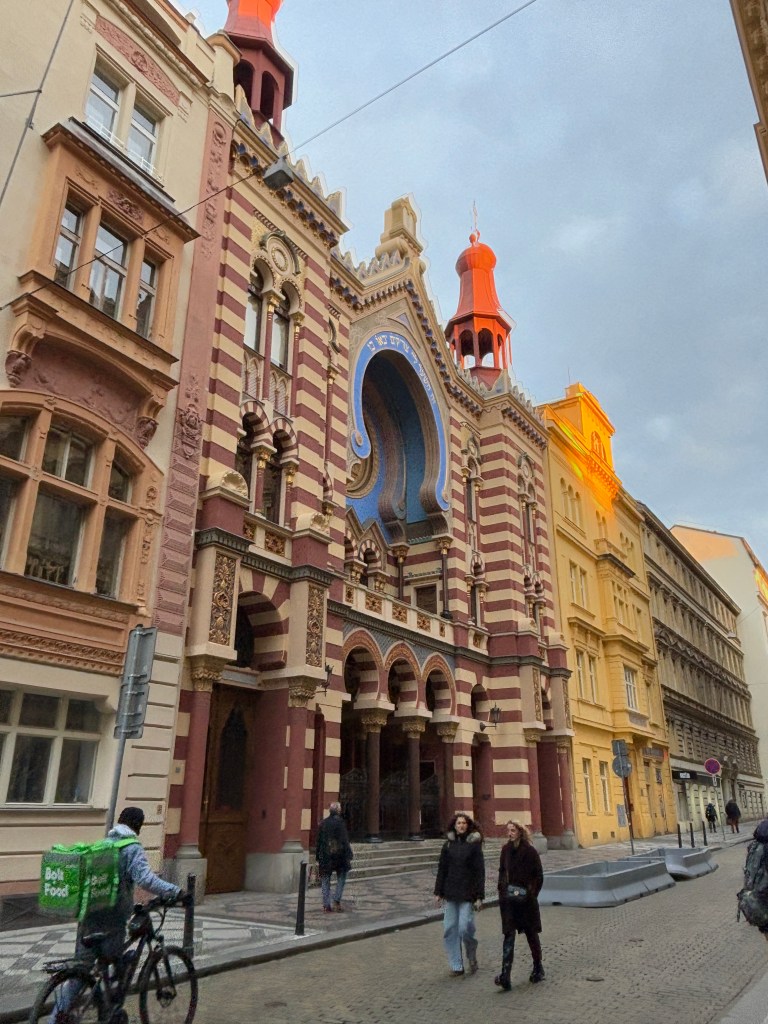
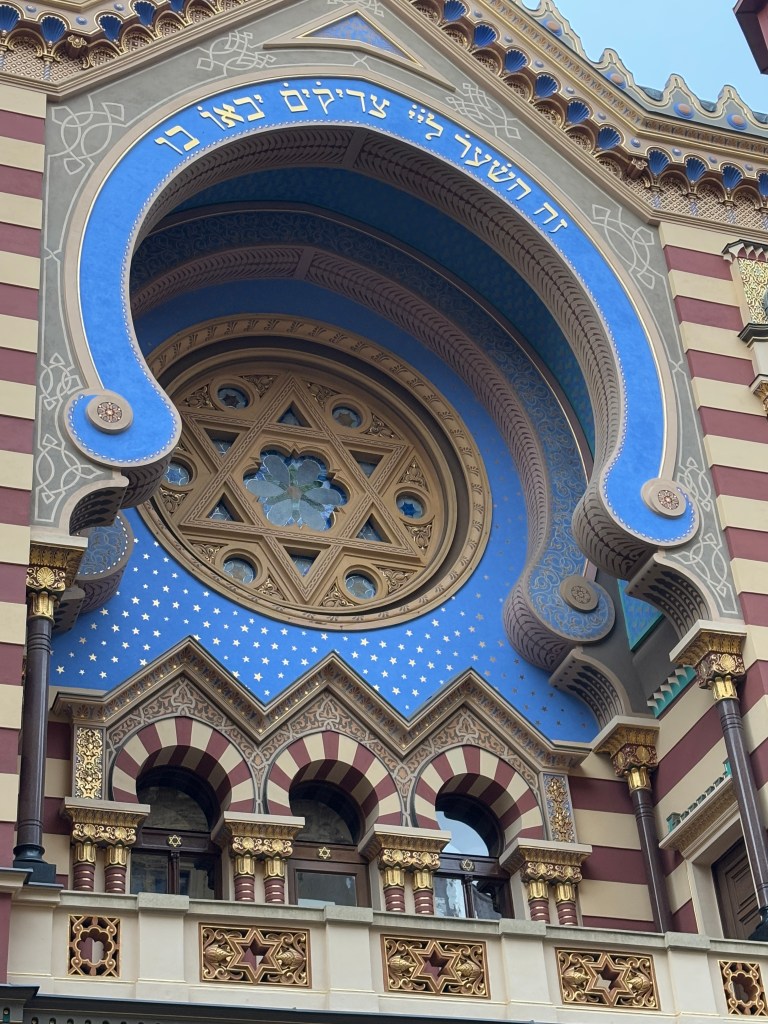
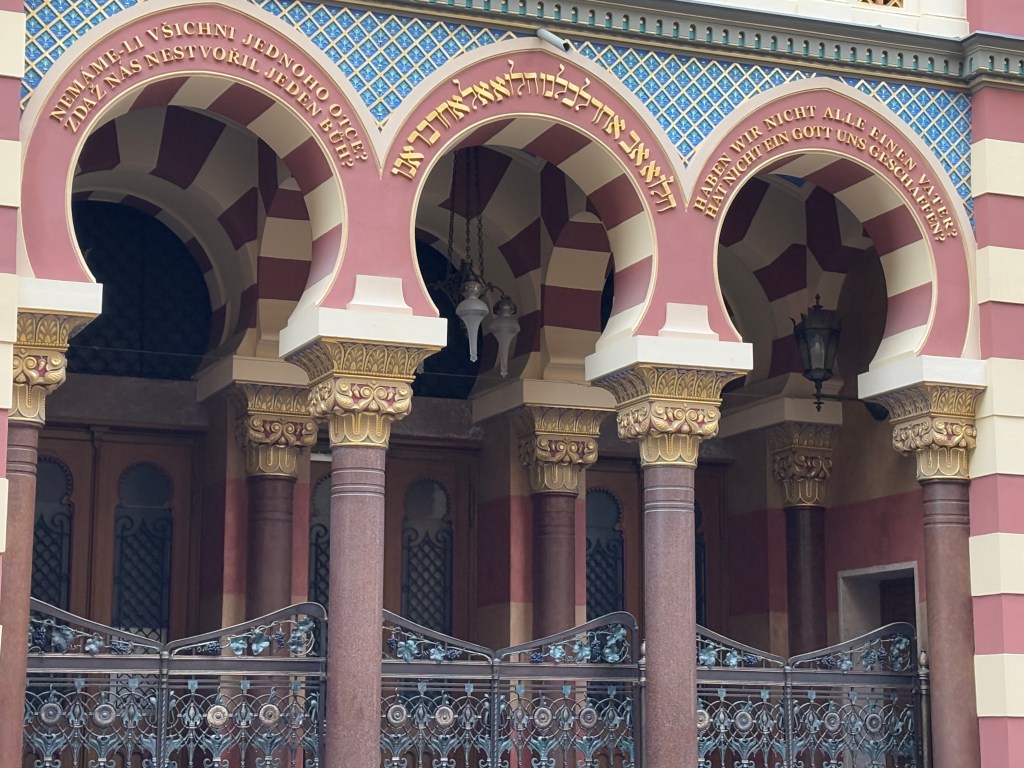
Seeing this Islamic architectural style in a Jewish synagogue made my heart burst with pride. And like a cherry on top, the inscription on the exterior of the entrance, boldly written in gold lettering in Hebrew, Czech and German, reads: “Have we not one Father? Did not one God create us?” (Malachi 2:10) What a message to highlight upon entry to this holy space. Sadly, we didn’t get a chance to peek inside the sanctuary, which is distinguished by its use of seven rows of Islamic arches. Wow! It is closed to the public for a few months, as they are in the process of creating a new exhibit on the Jewish community after 1989. It will be opening in March, and I may have to book a return visit to see it!
After a brief respite to put our feet up and sip on cappuccinos, we paid a visit to the iconic Fred & Ginger building after we enjoyed a fancy dinner by an up-and-coming chef recommended by the NYT that was a little over-the-top: more form over substance, but the cocktails were spot-on!
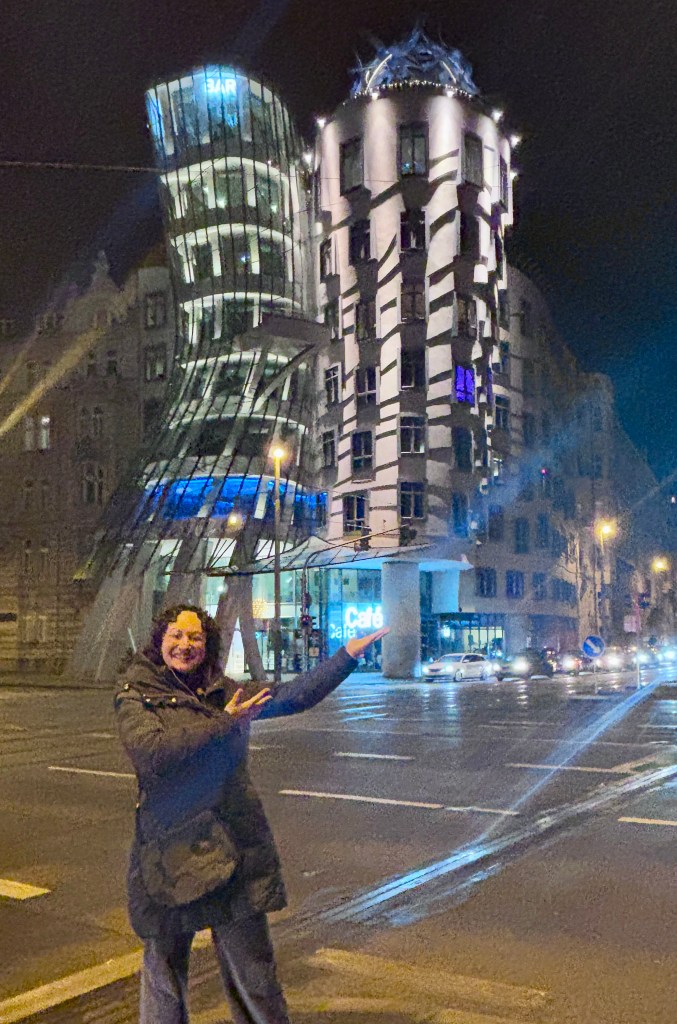
After a fun little photo shoot, we walked back into the old town for a 9pm jazz show at a venue three floors below ground in what seemed like an actual cave.
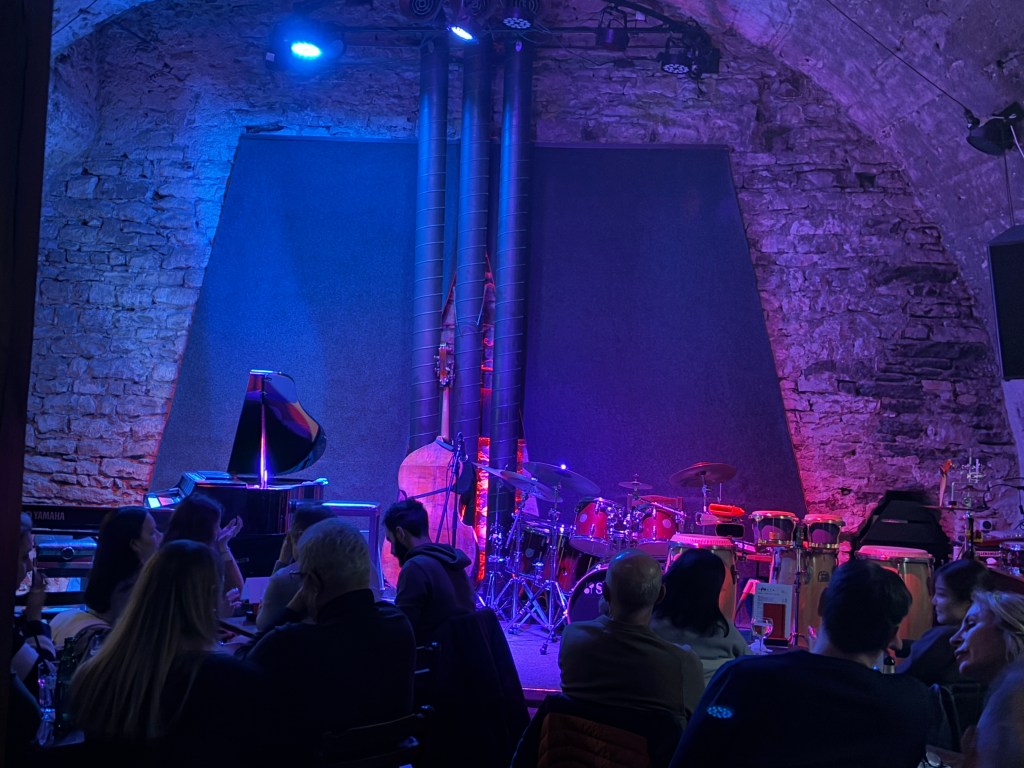
I have no idea what the original purpose of the cave might have been, but it was very cool. The band was a sweet group of childhood friends who were now “retires” in their 60s who clearly loved playing together, and they were incredible! After an hour, they took a 20 minute smoke/drink break, and then played until just before midnight. It was a fantastic show, perfect for our last night. The next day, we took a midday train back to Berlin without any hiccups, and made it home in time for Joanna to fix us a delicious pot of lentil soup.
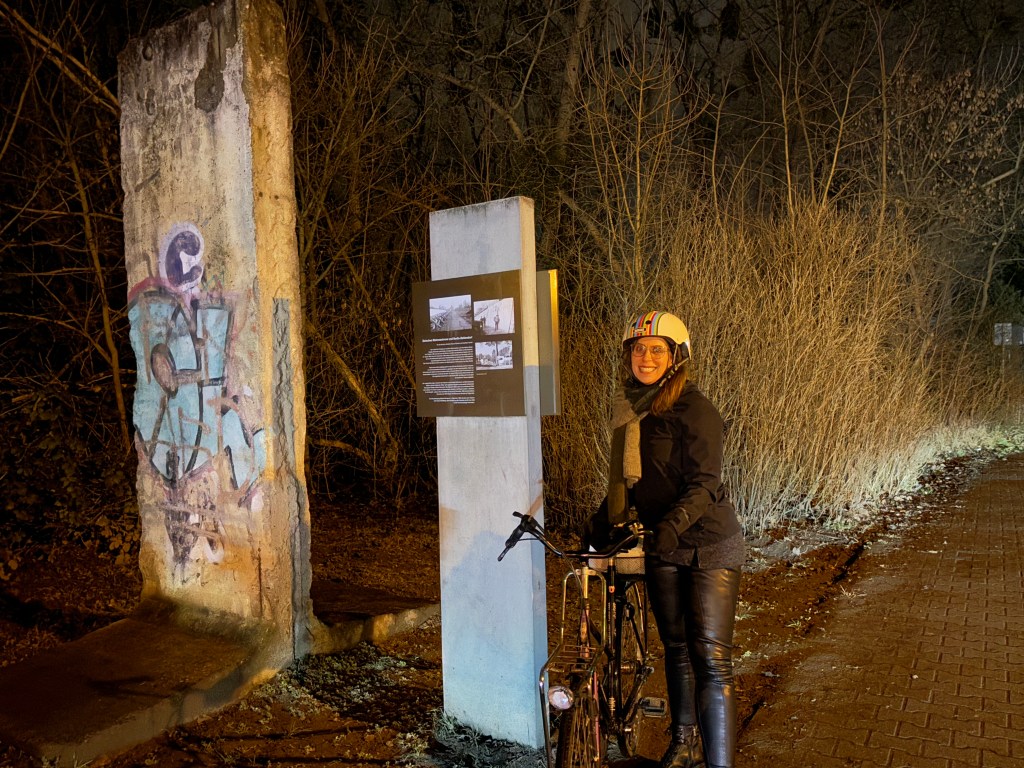
On the last day of Joanna’s visit, she insisted on having the “full experience” by biking to & from the train stations in the rain (although we agreed to avoid the woods, sticking to nicely paved city sidewalks) and pedaling past the nearby remaining relics of the Berlin Wall in the dark on our way home. It was so fun to share that part of our Berlin experience together!
Once we were downtown, we focused on exploring the neighborhood around the Neue Synagogue on Oranienburger Straße, enjoying the shops and cafes after paying a visit to the small historical exhibit inside the synagogue. While I had been to the synagogue a few times, I hadn’t yet seen the museum there, and it far exceeded our expectations. As it turns out, after the synagogue was desecrated on the Night of Broken Glass in November 1938, the community never rebuilt most of it- instead leaving a large open courtyard where the sanctuary once stood. That explains why the Rosh Hashanah services we attended were inside the gym behind the main building. The relics of the original synagogue have been deliberately left partially destroyed in much the same way as the historic Kaiser Wilhelm Memorial Church battered by the Allied bombing in 1945. Germans are all about keeping the physical damages of WWII visible for all to see as a constant reminder of war’s destruction, as if to say, “don’t be so stupid as to let this happen again.” I appreciate that, even if it means that the interior of this beautiful Moorish-inspired structure that could be totally spectacular has been left unfinished after its ruins were re-discovered by the community in 1989. A 19th century Orientalist professor (apparently this was an actual academic field at the time) named Paul De Lagarde was highlighted in the small museum exhibition in the synagogue’s former social hall, and had this to say about the Berlin synagogue’s design: “The Jews clearly emphasize their foreign nature every day… through the style of their synagogue. How can they claim the honor of being German if they build their holiest sites in the Moorish style as a constant reminder that they are Semites, Asians and a foreign people?” There is so much to say about this perspective! The fact that the synagogue was bold enough to highlight its connection to the Sephardic communities of Spain and the co-existence with Muslims under Islamic rule is so admirable and indicative of the undeniable connections between our communities. And yet this Orientalist professor in 19th century Germany called out this architectural choice as a way of “othering” Jews and claiming they could not possibly be accepted as Germans. Wow! Celebrating past co-existence with the Islamic world was used as a way to paint the Jewish community as unworthy of German nationality. Not only did this professor predict the scapegoating of Jews under the Nazis in the 1930s-1940s, but this idea of people from “the Orient” being un-German is also the basis for the rampant Islamophobia that is being uplifted in Germany today by the racist right-wing anti-immigrant AfD, now also supported by Elon Musk, who was so bold as to suggest at an AfD rally last week that Germans shouldn’t allow the past to hold them back. The historical parallels are almost too much to bear!
 Sorgers in Berlin: A Midlife Adventure
2 responses to “On visitors, laughter and wintery daze”
I can’t believe how you capture the moment at each novel juncture of your adventures, and fill in with the history spanning millenia about the area! And the genetics are kicking in – you can’t resist a good local beer! I would love to see Prague on my next visit – I’ve never been to a Slavic land. Keep enjoying, prosting, and posting!
— Dein herzlich Vater
LikeLike
Love your descriptions and depth of writing – – I feel like I’m there. Had a little chuckle too because my mom and I also went to hear the silly concert in the synagogue!!! There was this older guy who was hilarious— played the trumpet I think. Hugs!!!
LikeLiked by 1 person